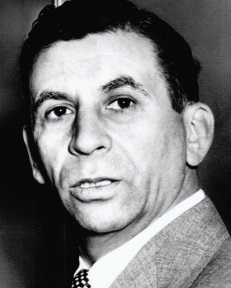
10 Intriguing Facts About Gambling Legend Meyer Lansky

Meyer Lansky, né Maier Suchowljansky (1902-1983), just may be the U.S. icon of 20th century gambling, illegal and legal. After being instrumental in creating the National Crime Syndicate, an amalgam of Italian-American Mafia and Jewish-American Mobsters, he worked his way up to its top position of chairman. His role, self-chosen, was facilitating the development, overseeing…

Woman Usurps Mobsters’ Gaming Action

1947-1952 Despite New York mobsters trying to scare her off, an ambitious woman — Elaine Townsend (née Margaret Helgeson) — held her own as a gambling operator in the late 1940s. Bright, young and gorgeous, she parlayed her chutzpah, commerce degree and drive into making gobs of money in Cuba. Big Screen Worthy Her exploits in…

Vegas Gambler Defies Mandate

1959 In February, The New York Times outed Clifford A. Jones. It brought to light that he held gambling interests in and out of Nevada, which The Silver State’s gaming law then prohibited. It was no secret that Jones owned shares in the Thunderbird, Palace Club, Golden Nugget and Lucky Strike casinos in Las Vegas.…

Mobster Meyer Lansky Tries to Desert USA

1970-1972 Meyer Lansky was the puppeteer behind the scenes of the world’s gambling stage from the 1930s to the 1970s, controlling and manipulating the characters, or National Crime Syndicate members, with aplomb. He capitalized on his brilliant financial acumen to develop and skim from an international casino empire — encompassing various U.S. states, Cuba, England,…

Nevada Makes Gamblers Choose

1957-1959 During Nevada’s 1957 legislature, State Senator Kenneth Johnson (R-Ormsby), voiced his concerns about some of the state’s gambling licensees* simultaneously co-owning Cuban casinos. He feared that: • Nevada licensees might form alliances with U.S. Mobsters in Havana, who primarily ran gambling there • Nevada licensees might use those relationships to hide Mob interests in…

Cuban Casino Push

1952–1958 When Fulgencio Batista returned to power as president in Cuba in 1952, he aimed to foster a gambling empire from which he could generate revenue for his coffers. To facilitate casino development, he and his administration: • Restricted gambling licenses to hotels or nightclubs worth $1 million or more • Waived taxes, which were…

WWII: Impact on Nevada’s Gambling

1944-1945 In the final year of World War II, three related mandates hampered Nevada’s gambling clubs, but, in general, casinos willingly withstood the hits out of a sense of patriotic duty. These directives, imposed by the United States’ war mobilization agency, followed a national call for roughly 200,000 more “able-bodied men, willing to do hard…