Wyatt Earp’s Main Career Was Gambling

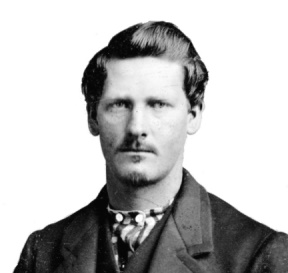
Iconic American figure, Wyatt Berry Stapp Earp (1848-1929), is heralded for his courageous exploits as a lawman, but he was a gambler first and foremost, often relying on the then-respectable profession to earn income throughout his lifetime. He’s earned a spot in U.S. gambling history. Earp’s Gambling Education and Practice At age 20, the tall,…

Kentuckian Builds U.S. Gambling Franchise in 1800s

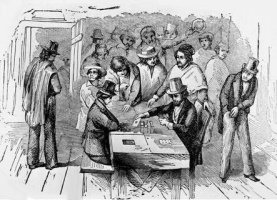
1832-1860 Elijah Skaggs, nè Eli Harrison Skaggs (1818-1890) stands out in U.S. gambling history. He was one of the country’s cleverest card tricksters and a hugely successful gambler. More significantly, he created a franchise system for the business of crooked faro. “He probably had more to do with the spread of gambling in this country…

Early On, The Louvre Suffers Typical Gambling Business Woes

1900-1906 A snapshot of six early years of one popular gambling-saloon in Reno, Nevada spotlights some of the problems these establishments routinely faced: on-site crime, financial troubles, crooked games and changes in both owners and gambling operators. Though the Louvre debuted in May 1897* at 22 E. Commercial Row in the then-called Marshall Building, it…

High Roller Bucks the Tiger in Tonopah

1907 A faro game with a $50 limit (at least $1,200 today) was underway in the Tonopah Club on a Thursday night in February. Colonel Abe F. Brown, one of the three proprietors of this mining camp saloon in Central Nevada, was playing. A wealthy man, he’d accumulated his assets via gambling enterprises and playing…

Quick Fact – Tinhorn Gambler

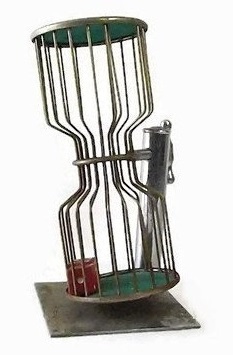
Today/1888 A “tinhorn gambler,” according to several dictionaries, refers to a game of chance operator who pretends to have money, ability or influence. The phrase is said to come from people who set up chuck-a-luck games with few funds and a cheap metal (versus leather) chute, called a horn — individuals whom faro dealers disparaged as…