
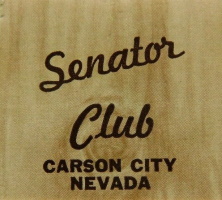
Gambling Club Suffers Great Losses in 1950s, Part I

1958-1959 Two major impactful events occurred, one in 1958, the second 1.5 years later, involving the Senator Club, which offered the game 21 and slot machines. Near the Nevada capitol in Carson City, this casino-restaurant-bar was popular among state legislators and politicians. At the time, Stella C. Vincent and William “Bill” E. Duffin had co-owned…

Nevada Gambler-Cum-Mayor Called Out for Bubble Peeking

1955-1956 In March 1955, Nevada gaming regulators accused Caliente mayor Donald E. Rowan of cheating while dealing a 21 game — which is illegal — in the Shamrock Club. He’d operated the Clover Street gambling enterprise with his partner and father-in-law Joe Colombo for seven years. Rowan had been the elected head of this southeastern…

Carlin Hotelman Turns Slot Machine Loser When He Violates Gambling Law

1947-1960 One Carlin, Nevada business owner learned the hard way that the state didn’t tolerate gambling operators cheating the players.  Gino Quilici just had been granted a gambling license in August 1952 for the State Inn, in the small city about 270 miles northeast of Reno. Only three months later, the Nevada Gaming Control Board…

Nevada: “Gambling and Prostitution Should Not Go Hand in Hand”

1954 Two gambling-related issues — cheating by operators and prostitution — in Nevada’s town of Searchlight came to a head at the July meeting of the state tax commission, then responsible for overseeing gaming. Regarding the roughly 300-resident community, commissioners 1) had heard rumors that its local ladies of the night mingled with customers in…

“Bugsy’s” Death Affects Granting of Nevada Gambling Licenses

1947 “The Flamingo Hotel, one of the nation’s most elaborate establishments, was [Benjamin] Siegel’s baby and was set to be the operating headquarters for his syndicate which embarked on a program to control gambling in Nevada as well as Los Angeles, San Francisco and other spots in the west,” read a Nevada State Journal op-ed…

Quick Fact – Greater Transparency Given

The Nevada Tax Commission members agreed by unanimous vote to allow reporters to sit in and report on its voting sessions, meetings in which they made key decisions.  Previously, voting had been done behind closed doors during “executive sessions,” or as journalists called them, “secret sessions.” Exceptions to the new policy included times when confidential…