Cashing In, Out on Slot Machine Route

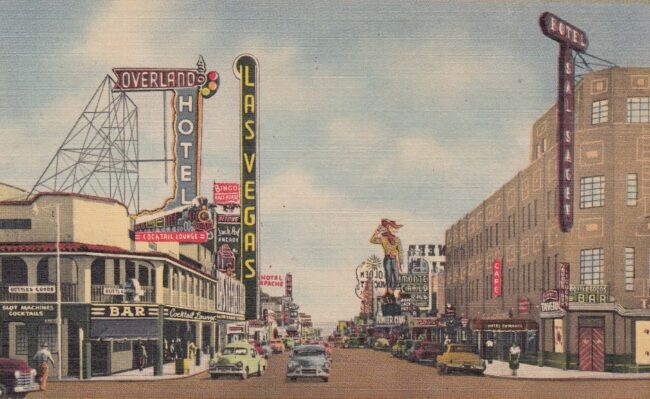
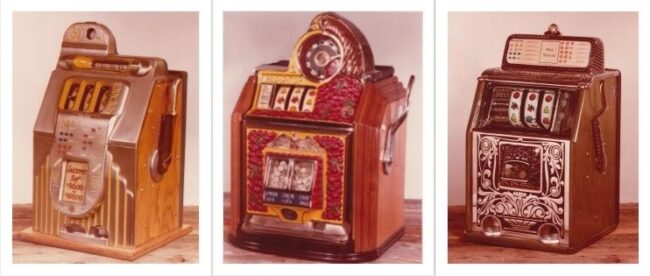
1951-1954 In October 1951, Southern California resident, Wayne H. Teipel, responded to a “For Sale” ad in the Los Angeles Examiner for a slot machine, pinball game and phonograph route business in Las Vegas, Nevada. The income touted was $1,000 a week (about $9,600 today) and the price, $28,500 ($276,000). Ray Wherrit of San Luis…

Quick Fact – Oops! They Don’t Match

1931 After a brand new roulette setup was put in use at a Las Vegas, Nevada casino, it was discovered the number 28 was black on the wheel, as it should be, but red on the betting layout. Confusion ensued, particularly concerning red or black bets, when the ball stopped at 28. Was it red…

Slot Machines Land on Trouble in Reno

1953 Theodore “Ted” Donaldson, 31, bought six slot machines from Joe Larango of Pyramid Securities Inc., a company with the devices in several Reno, Nevada locations, including the Oak Room casino. Donaldson paid the $1,825 cost (about $17,000 today) with a check. Each slot was valued at about $900 ($8,000 today). Larango soon discovered the check…

Quick Fact – Not What I Wanted to Hear

1954 Arthur R. Schultz of Ely, Nevada, who’ previously had held a gambling license for slot machines, asked then District Attorney of White Pine County, Jon R. Collins, to rule on whether or not a coin-operated bowling machine (think early version of Skee Ball) constituted a gambling device. Because the machine dispatched tickets that could…

Quick Fact – European v. American Roulette

1840s-Today Gambler Francois Blanc, at his casino in Bad Homburg, Germany, introduced roulette in the early 1840s with only 0 and no 00 on the wheel and table layout, a choice he stuck with when he assumed control of the Monte Carlo in Monaco two decades later. This roulette version became the European standard. In…

Quick Fact – Gambling Tools’ Fate

1895 Chicago gamblers waged a long, hard legal battle against the law that allowed police and other authorities to destroy casino equipment seized during the execution of a search warrant. The fight ended, however, in 1895 with the Supreme Court of Illinois ruling that the legislation was constitutional — a major blow to casino operators and…