
Renowned Boxers Maneuver Into Gambling-Related Businesses
This gambling history blog post discusses four famous boxers and their involvement with casino-related enterprises in the 1900s, in Mexico and Nevada. Learn more here.

This gambling history blog post discusses four famous boxers and their involvement with casino-related enterprises in the 1900s, in Mexico and Nevada. Learn more here.

1920s-1960s Joseph “Doc” Stacher (né Gdale Oistaczer)* was a New Jersey-based Mobster who made his foray into organized crime with Benjamin “Bugsy” Siegel and Meyer Lansky’s Bugs and Meyer Mob in Manhattan, N.Y. and then with Abner “Longie” Zwillman’s Third Ward Gang in Newark, N.J. Eventually, he teamed up with local Mobsters, including Zwillman…

1936 A man walked into the Greenleaf & Crosby jewelry store in New York’s Rockefeller Center at about 11 a.m. on Monday, January 6. Two others followed through the other entrance. “This is a stickup,” one of them said. He ordered the two salesmen there, Walter Gibson and Robert Mercadal, to sit and not turn…

1906-1967 Frank “Frankie” Frost (1898-1967) spent about two decades working in Reno’s gambling scene and had close relationships with those in power locally, including gambler-Mobsters William “Bill/Curly” Graham and James “Jim/Cinch” McKay and banker and businessman, George Wingfield, Sr. Frost had a checkered past, which eventually got him blacklisted from Nevada’s gambling industry. Here we…

1923-1945 Reno, Nevada’s Third Ward city councilman during the 1920s and 1930s was “owned by” the local Mobsters, acted in their interests and protected them, contended Harold S. Smith, Jr., Harolds Club co-owner, in his book I Want to Quit Winners. That councilmember was William A. Justi (1873-1945). The Third Ward encompassed the “liberal” district,…

1929-1941 In the early decades of legal gambling in Nevada, Reno’s McKay/Graham combine expropriated legitimate business owners’ casinos in Washoe County. The local Mob, headed by William “Bill” Graham and James “Jim” McKay, strove to dominate and control gambling in Reno without competition. Thus, anyone who wanted to open a gambling club had to seek…

1920s-1930s It’s undisputed that Mobsters ruled early gambling in Reno, Nevada’s 1920s and 1930s. Two club owners who offered games of chance in the city courageously wrote, in their memoirs roughly two decades later, about the powers that were. Here are the authors and their depictions created with words: Harold Smith, Sr., I Want…

1935-1939 The reach of Reno, Nevada’s Mobsters into gambling during their heyday allegedly extended to a small Oregon hideaway for California’s rich and famous: Currier’s Village. William “Bill/Curly” Graham and James “Jim/Cinch” McKay are said to have operated the gaming at the secluded resort with “their friends from Los Angeles,” according to Al Moe in…

1940-1941 In a series of raids in December 1940, Washoe County deputy sheriffs confiscated gambling-related paraphernalia from three Reno, Nevada locations: 1) Bank Club casino 2) Washoe Publishing Company (WPC) (room 311 in the Lyons Building) 3) Western News Company (WNC) (room 15 in the Fordonia Building). The equipment taken included teletypewriters,* Teleflash** units, telephones, switch boxes,…
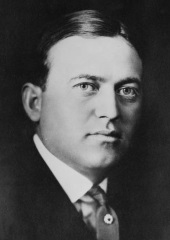
1920s-1930s Presumably to gain money, power and notoriety, two men controlled gambling in Reno, Nevada during the 1920s and 1930s through violence, payoffs, intimidation, threats and other gangster techniques. The industry mostly was illegal, with some games allowed, until 1931. Their modus operandi became the example of how it was done in Nevada, a guide…