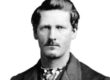
Pat McCarran, U.S. Senator for Nevada, 1947
1933-1954
His unfavorable personal opinion about gambling notwithstanding, Patrick “Pat” A. McCarran (D-Nev.) — U.S. Senator between 1933 and 1954 — acted repeatedly on the industry’s behalf. Had he not, it’s likely gaming wouldn’t have emerged as The Silver State’s greatest revenue-producing economic sector — a positive or negative, depending on one’s view.
Because gambling had become vital to Nevada — or “woven … in its various forms into the warp and woof of the state’s economic structure,” in the words of McCarran — he believed he had no choice but to do what he could to keep it thriving. But he felt like a “whore,” he said, defending gamblers (casino owners and operators), whom he considered “tinhorns.”
“In the climactic decision of his long and turbulent career, [McCarran] characteristically chose to justify and defend his beloved Nevada rather than take it into one more battle with poverty and want,” wrote the authors of The Money and The Power.
Inside His Bag of Tricks
Here are 7 of McCarran’s pro-gambling efforts:
1) He intervened to get underworld denizens gambling licenses.
When Moe Dalitz, Cleveland mobster, applied for a gambling permit for the Desert Inn casino in Las Vegas in 1949, the Nevada Tax Commission said no based on his criminal background — bootlegging and illegal gambling. McCarran discussed the matter in person with one of his powerful friends, Salvatore “Sam” Maceo, Texas organized crime boss who previously had partnered with Dalitz in illegal liquor distribution.
After the McCarran-Maceo tète-a tète and supposed intervention by Maceo subsequently, state gambling regulators granted Dalitz a license.
2) He helped gamblers surpass other obstacles.
When mobster Benjamin “Bugsy” Siegel and the Nevada Projects Corporation, the cadre of mobsters financing the new hotel-casino, were having the Flamingo constructed in Las Vegas immediately following World War II, in 1946, construction materials were in shortage. As such, the Nevada office of the federal Civilian Production Administration allocated scarce materials on a project priority basis.
McCarran jumped the Flamingo to the top of the list so it could, and it did, receive construction materials without delay.
3) He got the scope of the Kefauver inquiry broadened.
In 1950, when Senator Estes Kefauver (D-Tenn.) pursued launching a congressional investigation into gambling nationwide, McCarran got the target expanded to encompass all types of organized crime — prostitution, narcotics, loan sharking, murder, extortion and labor racketeering — to lessen the resulting consequences to Nevada’s gambling.
The probing body became the United States Senate Special Committee to Investigate Crime in Interstate Commerce, or in short, the Kefauver Committee.
4) He delayed Congress’ approving the Kefauver inquiry.
Among his efforts there, he begged for additional time for the Judiciary Committee, which he headed, to consider the proposal, raised potentially related legal issues and suggested the matter be sent to the Senate Commerce Committee for its review as well.
Kefauver, however, received a green light, and his team conducted hearings in 14 major U.S. cities during 1950 and 1951.
5) He fought Congress’ agreement to levy contempt citations against Kefauver witnesses in general.
When subpoenaed to testify during the hearings, numerous gamblers either failed to appear or when they did appear, they refused to answer questions. Kefauver wanted them slapped with a congressional contempt charge* for obstructing the investigation. McCarran fervently argued against the idea but lost that battle. Once Congress approved one contempt charge, a slew followed.
6) He got contempt charges against multiple gamblers quashed individually.
7) He helped thwart passage of a bill to tax all gamblers.
Growing out of the Kefauver Committee’s findings, the House Ways and Means Committee, in May 1951, voted to impose a “10 percent gross receipts tax on bookies, numbers rackets operators and others who operate gambling pools” (Nevada State Journal, May 17, 1951). Kefauver urged that the tax bill from the House must be amended to incorporate all forms of gambling.
McCarran called on some Nevada gamblers to lobby against the bill while he fought it at the Senate Finance Committee level. He pleaded his case, that the “cumulative result would spell tragedy for the State of Nevada” and gambling, as a major economic component, needed protecting.
What eventually passed were a 10 percent tax on all wagers concerning sporting events or lotteries and a $50 annual occupational stamp excise for bookmakers and lottery operators. These mandates comprised a small portion of the much larger Revenue Act of 1951.
For these and his other interventions in support of gaming, McCarran was lauded by some and criticized by others.
—————————
* Contempt of Congress is the criminal act of obstructing the work of the U.S. Congress or one of its committees, a misdemeanor punishable by a $100 to $1,000 fine or one-month to one-year imprisonment.