Hot Springs: Illegal Gambling Mecca, Criminal Hangout

1860s-1960s “The loose buckle in the Bible Belt” and “Las Vegas before Las Vegas had water” — these were Hot Springs, as described in the press (Hot Springs, 2013). This Central Arkansas city boasted illegal, yet wide-open, gambling for about a century, from the late 1860s until the late 1960s, making it the only United…
Criminals, Money Problems Plague Reno Casino

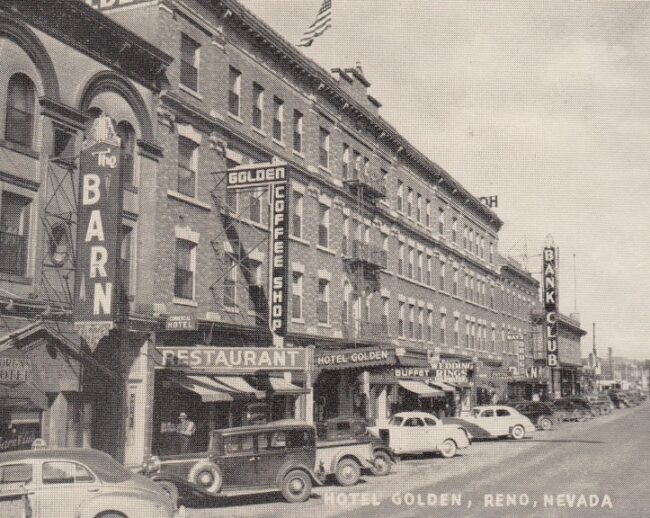
1940-1943 The Barn Club casino’s existence during World War II was rocky and, therefore, cut short. It began in December 1940, when Jack Fugitt, an entertainment machine business owner, and Walter Oswald, assumed the lease of the Northern Club in Reno and remodeled and reopened the place as the Barn Club. It was located at…

Vegas Casino Welshes on Paying Out

1958-1961 The Hacienda in Las Vegas, Nevada held an ongoing promotional contest at its golf course, which was widely advertised, even on the back of the postcard above. Participants would pay 50 cents (about $4.25 today) per attempt at a hole-in-one from 165 yards away, and the casino would award $5,000 ($43,000 today) to anyone who accomplished…

Unexpected Cost at New Orleans Gambling Raid

1953 On a weeknight in May, Louisiana state policemen surrounded a high-end home in the New Orleans suburbs. One of them knocked on a secret side door that contained a one-way glass window, allowing those inside to see out but not those outside to see in. A man in the house opened the door but…

Topless Dealers: Brainchild of Nevada Casino

1966 The Silver Nugget casino announced it would debut topless, female, 21 (blackjack) dealers during the midnight to 8 a.m. shift. This, too, was the gist of the complaints the Nevada attorney general (A.G.) received in April. Allegedly, the North Las Vegas business had hired women willing to work naked to the waist and told…

Chancy Chaps Champion Chilean Casino

1928-Today Members of English royalty unwittingly helped launch a new South American casino toward success in the 1930s. After Chilean President Carlos Ibáñez del Campo, in 1928, authorized creation of a gambling house, Viña del Mar (translated as “vineyard of the sea”), a city on the country’s Pacific Coast, spent $6.5 million ($95.6 million today)…