Wily Desperado Falls Short on Crime Execution

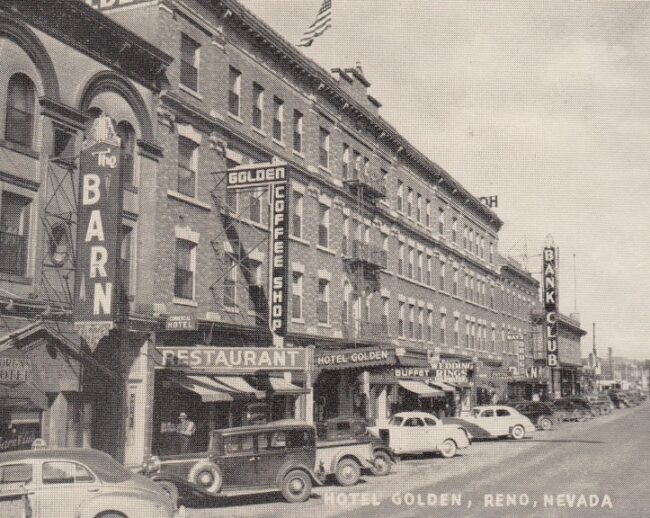
1943-1949 Two acquaintances were having a drink at a Reno casino bar — Miles T. Ellis, 47, a tourist, and Anthony Swiderski, 52, a local chef in the Northern Nevada town. At an opportune moment, Swiderski spiked Ellis’ drink with croton oil,* which has a slight smell and unpleasant taste. This plant-derived substance, if ingested,…

Quick Fact – Kefauver in Hot Springs

1924 Senator Carey “Estes” Kefauver (D-Tenn.), the driving force behind rooting out illegal gambling and organized crime in the United States in the 1950s with his famous eponymous committee, decades earlier had taught math and coached football at the high school in a city where illegal gaming was allowed and rampant from the 1860s to…

Hot Springs: Illegal Gambling Mecca, Criminal Hangout

1860s to 1960s “The loose buckle in the Bible Belt” and “Las Vegas before Las Vegas had water” — these were Hot Springs, as described in the press (Hot Springs, 2013). This Central Arkansas city boasted illegal, yet wide-open, gambling for about a century, from the late 1860s until the late 1960s, making it the…

Criminals, Money Problems Plague Reno Casino

1940-1943 The Barn Club casino’s existence during World War II was rocky and, therefore, cut short. It began in December 1940, when Jack Fugitt, an entertainment machine business owner, and Walter Oswald, assumed the lease of the Northern Club in Reno and remodeled and reopened the place as the Barn Club. It was located at…

Quick Fact – “Fun, Play and Gaiety”

1947 The Sonoma Inn hotel-casino debuted on May 27, 1947 at 185 W. Winnemucca Boulevard in Winnemucca in Northwestern Nevada, about halfway between Reno and Wells, likely named after the nearby Sonoma Range mountains. In 1969, the property was remodeled and renamed the Winners Inn and Casino, which is open still today. Ad from the…

Vegas Casino Welshes on Paying Out

1958-1961 The Hacienda in Las Vegas, Nevada held an ongoing promotional contest at its golf course, which was widely advertised, even on the back of the postcard above. Participants would pay 50 cents (about $4.25 today) per attempt at a hole-in-one from 165 yards away, and the casino would award $5,000 ($43,000 today) to anyone who accomplished…

Quick Fact – Beano v. Bingo

1944 “Are you in favor of banning beano when played for prizes?” This was one of Massachusetts’ 1944 ballot questions. By the 1940s, beano — played with beans as markers, hence the name, and popular on the carnival circuit — had evolved into bingo. How? Brooklynite Edwin S. Lowe, after learning of beano at a Georgia carnival…

Unexpected Cost at New Orleans Gambling Raid

1953 On a weeknight in May, Louisiana state policemen surrounded a high-end home in the New Orleans suburbs. One of them knocked on a secret side door that contained a one-way glass window, allowing those inside to see out but not those outside to see in. A man in the house opened the door but…

Quick Fact – Casino Discovery

1935 Singer and actress Judy Garland (neé Frances Ethel Gumm) was discovered while headlining with her two older sisters at the Cal-Neva Lodge at Lake Tahoe in Nevada. Theatrical agent Al Rosen was in the audience when The Garland Sisters sang, their mom Ethel on the piano. “Get that kid over here,” Rosen told the…