Quick Fact – The Other Keno

1941 When Maxwell Kelch applied for call letters for his Las Vegas, Nevada radio station, he requested KLVN as a first choice and KENO as a second, certain the Federal Communications Commission (FCC) approve a gambling-related name. The FCC apologetically notified Kelch that KLVN already was in use elsewhere so he’d have to accept using…

Quick Fact – Creature Game Creation

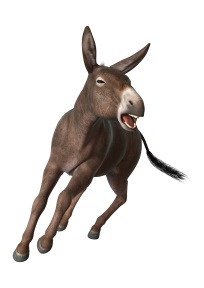
1962 How ’bout a game of Burro? Fred Carrier, a Stateline, Nevada accountant, developed a gambling game with this name, the concept for which came to him in a nightmare. Based on magnetism, it featured a plastic burro that rotated in the middle of an octagonal table. The player had a choice of betting on which…

Unable To Provide An Alibi

1906-1907 “They’ll never get me,” prisoner John Edwards said while being ushered into court for his trial. “They’ll never fasten anything on me” (Nevada State Journal, April 19, 1906). “Hasn’t a man a right to carry $200 or $300 on his person? Is that a crime?” Allegedly, two days earlier, Edwards, with two other masked…

Quick Fact – Casino Name Beef

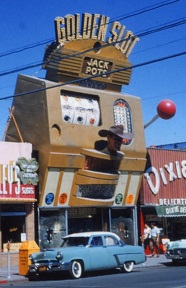
1957 After Robert Van Santen and Cecil Lynch’s business partnership in the Las Vegas, Nevada Fortune Club went sour (Lynch broke off to open his own gambling club at the Golden Slot site), the two fought over use of that name for their respective casinos. The dispute led to Van Santen suing Lynch for $100,000…

Quick Fact – Betting “The Farm”

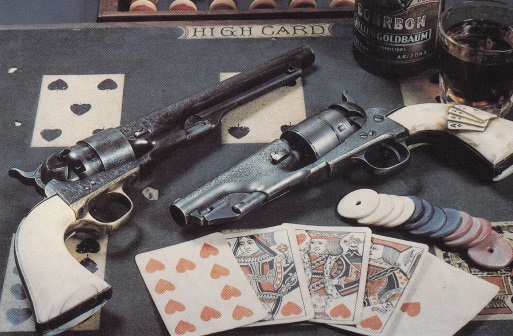
1908 Johnny-Behind-the-Gat bet more than he should’ve. He was a prospector and miner said to have little common sense, a big temper and a penchant for using his weapon to solve disputes. John Cyty (his real name), in a 12-hour roulette game, bet and lost $75,000 worth of shares (a roughly $2 million value today)…

Casino Owners in Combustible Predicament

1949-1950 The Den opened its doors in spring 1949. The proprietors — Donald A. Bentley, John R. Hope and Robert M. Colahan — likely were hoping for at least as long a run as their predecessors’, nine-plus years, when the property was called the Louvre. But it didn’t happen. In mid-September 1949, from the basement…

Quick Fact – Oasis in the Desert

1950 Las Vegas spent $750,000 a year on advertising (about $7.5 million today). The Chamber of Commerce promoted the town as: “An oasis for the harassed refugees from artificial restraints and laws of other states.“ Photo from the University of Nevada, Las Vegas, University Libraries’ Digital Collections

Mega Poker Loss in California

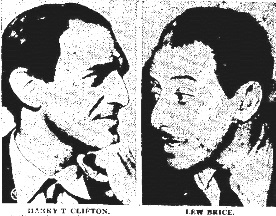
1938 Esquire* Harry T. Clifton was a wealthy Englishman who owned racing stables and often visited Southern California. During his visit there in April 1938, he gambled with Lew Brice and Tommy Guinan in a Long Beach hotel. Brice was the brother of comedienne Fanny Brice, and a former stage dancer and comedian in his…