Quick Fact – Nevada Bookmaking Legalized

1941 In an override of Governor Edward Carville’s veto, Nevada legislators legalized bookmaking. The law explained that “the receiving of bets or wagers on horse races held without the state of Nevada shall be deemed to be a gambling game,” thereby making it permissible for those with a gambling license to take such bets on such events.
Quick Fact – Behind the Word “Casino”

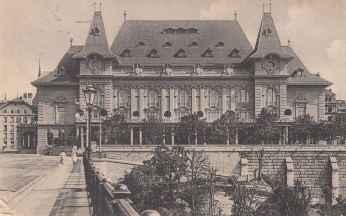
Today A casino is a place that houses and facilitates various gambling forms, according to the English, but a casino or kasino is an officers’ mess hall to the Germans, Spanish and others. In Italian, the language of origin, the word derives from casa (house) and translates to little house. Casino first referred to a…

Quick Fact – Hit Them in the Pocketbook

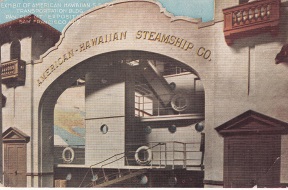
  1913 During an era of reform in the United States, the American-Hawaiian Steamship Co. tried to discourage gambling by raising the freight rate on poker chips transported from New York to the West Coast by 50 cents. It bumped the cost from $1.75 to $2.25 per 100 pounds (from about $42 to $54 in today’s…

Bucket Shopping: A Species of Gambling

1870s-1920s “I want to go short 1,000 bushels of December wheat, 1 cent on the bushel.” This $10 bet was typical back in the heyday of bucket shops in the United States, between 1870 and 1920. People wagered on the future prices of stocks, securities and commodities — grains, cotton, oil, etc. — without actually…

Gambler’s Drunken Stupidity

1904-1905 Criminal drama occurred between two men late one November morning in the Wieland saloon in Reno, Nevada in 1904. James Mann, a Wyoming man who sometimes worked in Silver State gambling clubs — the Louvre saloon and Oberon bar — had been imbibing for some time inside the Wieland. He jokingly began to spar with…

Bilking of Vegas’ Nevada Club

1961-1966 Early in 1961, Michael Catrone, 60, an apartment complex owner, presented to the Nevada Club in Las Vegas, Nevada a winning keno ticket for $25,000 ($198,000 today). Yet the casino’s general manager didn’t pay it because it was suspicious — the ink on the ticket was lighter than on other ones. An internal inquiry…

Quick Fact – A Splurge For a Splurge

1954-1962 Each time her husband, Ernie Kovacs, lost big at poker, actress Edie Adams bought herself a chinchilla coat or antique harpsichord. When the bills for those purchases arrived, he’d say, “We can’t afford this!” She’d respond, “Simple, just stop gambling.” Photo from The New York Public Library Digital Collections, 1967-1986, Billy Rose Theatre Division:…

Gambling Czar Abduction Mystery

1946 Two brothers — Edward P. and George Jones — freely controlled Chicago, Illinois’ policy* racket for 25 years, beginning in the 1920s. As a result, the two raked in money, $10 to $30 million per year, in nickels and dimes, primarily from the Caucasians and African Americans living in slums, which turned the siblings…

Quick Fact – Renowned U.S. Gambling Towns

1870s Three fledgling U.S. towns that boomed and evolved into gambling centers were: Deadwood, South Dakota, where Wild Bill Hickok was killed while playing poker, immortalizing “dead man’s hand” Leadville, Colorado, where Doc Holliday shot the former policeman, Billy Allen Tombstone, Arizona, where the Gunfight at the O.K. Corral involving Virgil, Morgan and Wyatt Earp…